So you’re thinking about jumping into Azure DevOps? Smart move. But let’s be honest – trying to figure out Microsoft’s pricing can make your head spin faster than a broken CI/CD pipeline. Don’t worry, I’ve been there. After helping dozens of teams navigate these waters, I’m going to break down exactly what you’re looking at cost-wise, no fluff.
The Sweet Spot: Free Tier Benefits
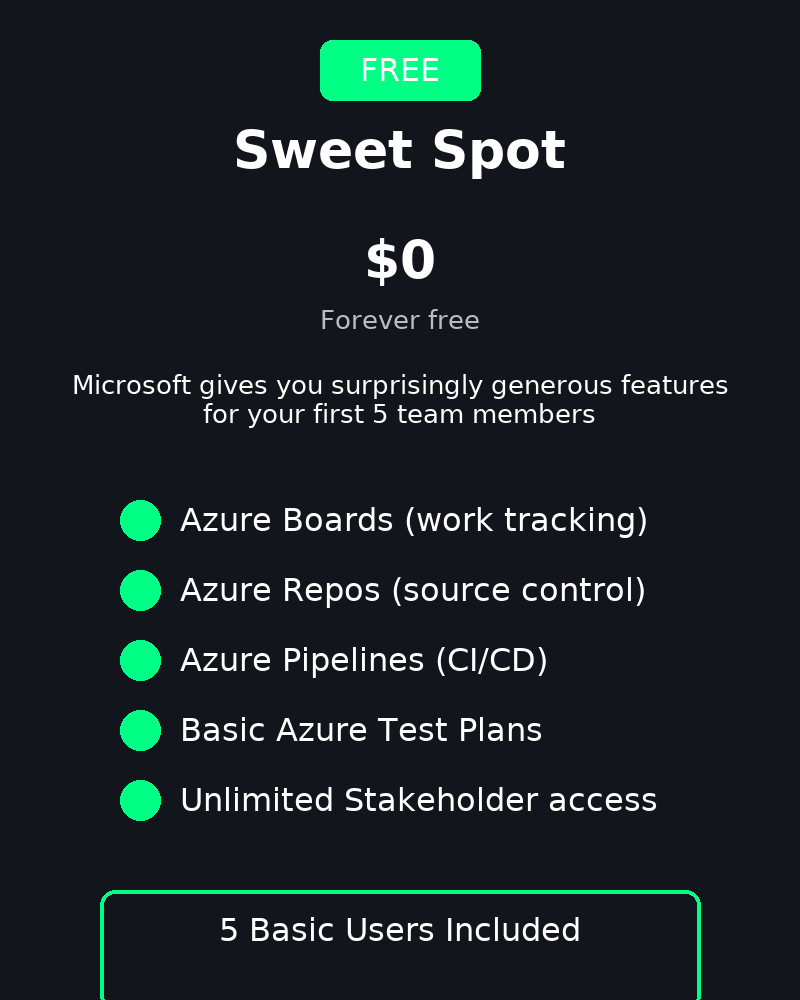
Here’s the thing that surprises most people – Microsoft actually gives you a lot for free. Your first five team members get full Basic access without paying a dime. We’re talking Azure Boards for tracking work, Azure Repos for your code, Azure Pipelines for builds, and even basic Azure Test Plans.
I’ve seen plenty of startups run their entire operation on this free tier for months before hitting the paywall. It’s genuinely generous compared to what you’d pay for separate tools.
When The Bills Start Coming: Azure DevOps Pricing
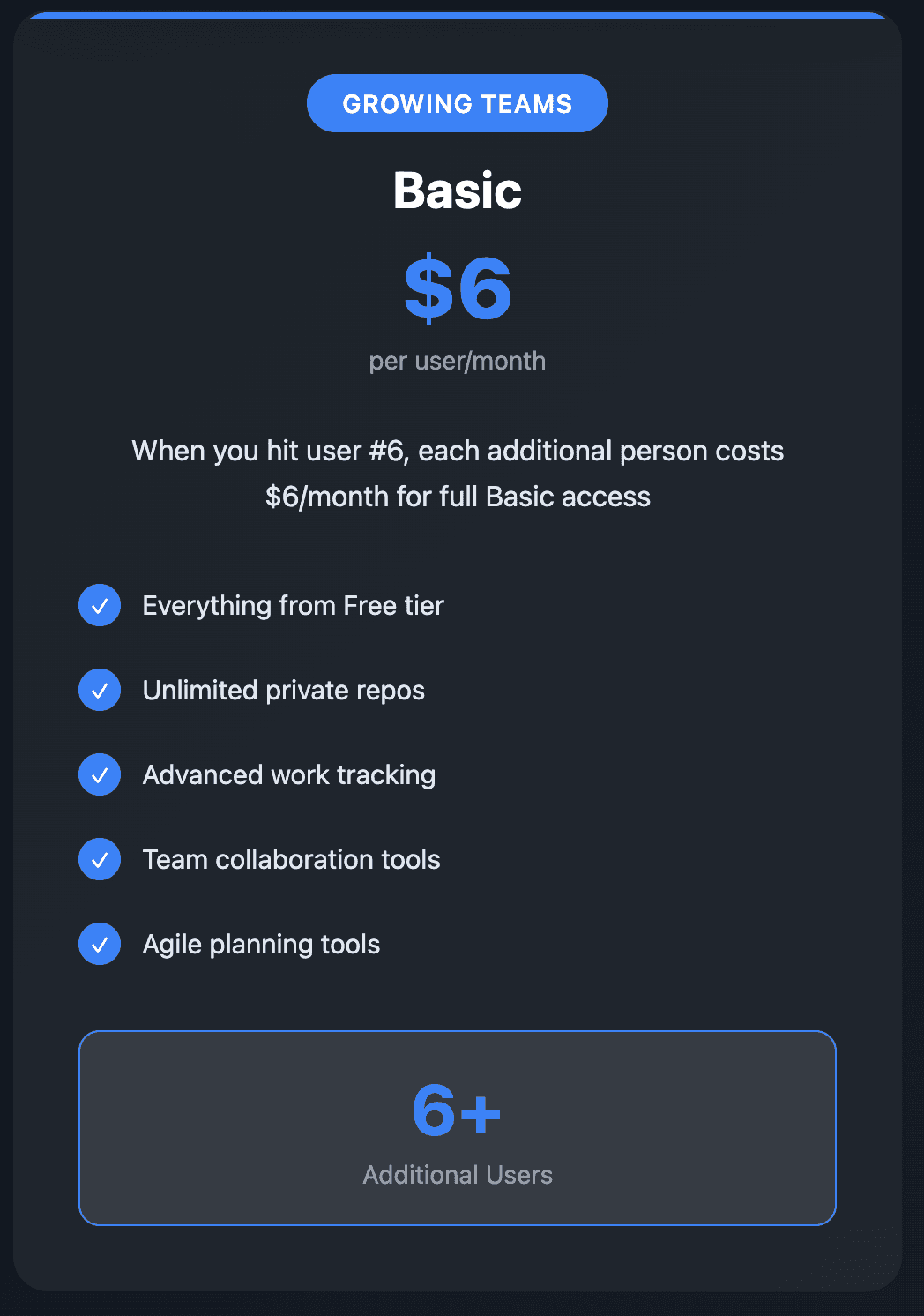
Once you hit user number six, that’s when azure devops pricing kicks in. Each additional Basic license runs you $6 monthly per person. Now, this azure devops license cost might seem steep at first glance, but think about it – you’re getting project management, source control, and CI/CD all rolled into one. Try pricing out Jira, GitHub, and Jenkins separately. You’ll come running back.
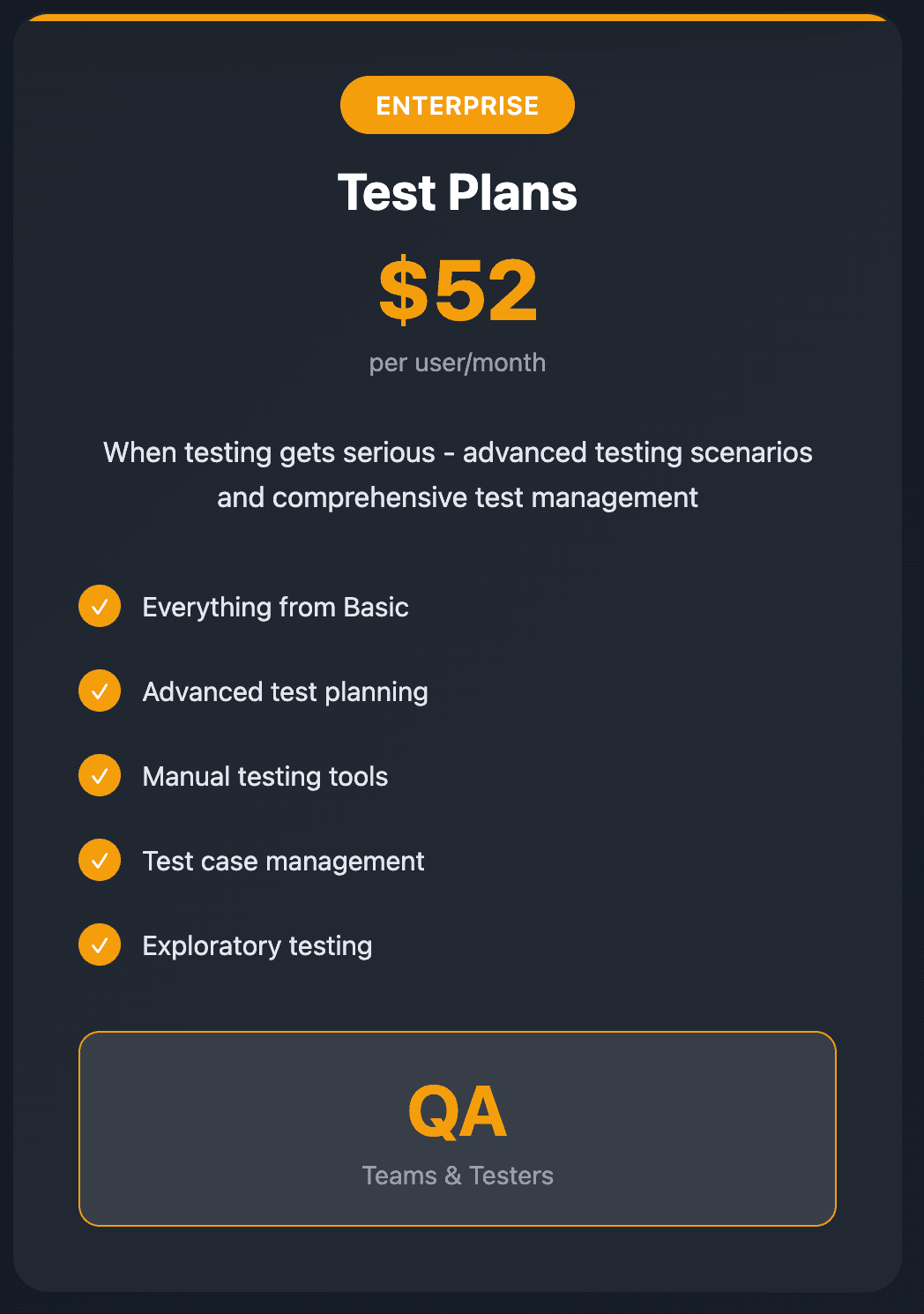
The math gets interesting when you need serious testing chops. The Basic + Test Plans tier jumps to $52 per user monthly. Yeah, that’s a significant bump, but if you’re doing complex testing scenarios, the advanced features actually save time (and sanity).
The Stakeholder Hack Everyone Should Know
Here’s a money-saving trick that not enough people use: Stakeholder access is completely free for unlimited users. Your project managers, executives, and anyone else who just needs to peek at progress reports? They don’t cost you anything. This alone can slash your azure devops costs if you’re strategic about user roles.
Visual Studio Subscribers Get a Free Pass
Already paying for Visual Studio subscriptions? You’re golden. Basic Azure DevOps access comes bundled in – no extra charge. This is Microsoft’s way of keeping you in their ecosystem, and honestly, it works.
Azure Pipelines Pricing: Where Things Get Interesting
Microsoft throws you one free parallel job with 1,800 minutes monthly for builds. Most small teams never hit this limit. But when you do need more juice, additional parallel jobs cost $40 each per month for Microsoft-hosted agents.
Want to use your own servers? Self-hosted agents are cheaper at $15 monthly per additional job after the first free one. This is where the azure devops cost can actually work in your favor if you’ve got the infrastructure already running.
Storage Wars: Azure Artifacts
Package management gets 2GB free storage. Beyond that, it’s $2 per GB monthly. Unless you’re hoarding massive artifacts, this rarely becomes a budget-buster.
The On-Premises Route: Azure DevOps Server
Some organizations can’t or won’t touch the cloud. Azure DevOps Server exists, but you’re looking at Visual Studio subscriptions plus CALs plus Windows Server licensing. The azure devops price efficiency usually favors the cloud option unless you have specific compliance requirements.
Picking Your Plan: Real-World Scenarios
| Team Size | What Works | Monthly Cost | Why It Makes Sense |
| 1-5 users | Free Basic | $0 | Perfect for bootstrapping |
| 6-20 users | Basic ($6/user) | $36-$120 | Growing teams need flexibility |
| Enterprise | Basic + Test Plans | $312+ | When testing gets serious |
| Mixed access | Basic + Stakeholders | Variable | Lots of read-only users |
Real Talk: TechStart Solutions Figures It Out
Let me tell you about TechStart Solutions – they’re not a huge company, just a growing dev shop that was stressed about ado pricing when they expanded from 3 to 15 developers.
Sarah Chen, their CTO, told me: “We were concerned about the costs escalating as our team grew, but Azure DevOps actually became more cost-effective than our previous toolchain combination. The integrated approach eliminated the need for separate tools for project management, source control, and CI/CD.”
They got clever about it. By giving project managers Stakeholder access and running builds on their own servers, they cut their monthly azure devops costs by 40%. That’s real money saved through understanding the system instead of just accepting the default options.

Struggling with Azure Costs & Performance?
Our Azure Managed Cloud Services ensure smooth operations, proactive cost control, and scalability — so your team can focus on growth, not cloud headaches.
Explore Our Azure Managed ServicesThe Bottom Line
Look, Azure DevOps pricing isn’t slick. It’s just as easy to get your head around as the pieces of DevOps are to chew on. The free tier is more than generous for small teams, and as your teams grow, the scaling seems completely rational.
Don’t just look at the license costs though. Factor in the time you’ll save not juggling five different tools, the reduced complexity, and the fact that everything actually talks to each other. Most teams find the productivity gains justify the investment pretty quickly.
If you need help getting everything set up optimally, consider working with experienced devops development services. They’ll help you dodge the typical landmines and maximize your cost and the project implementation. If you’re also comparing who should handle your DevOps setup, here’s a quick DataArt vs AppRecode expert comparison to see the difference in approach and fit.
And if you’re already running azure managed cloud infrastructure, the integration benefits extend way beyond just the base pricing.
Frequently Asked Questions
How much does Azure DevOps cost after 5 users?
Azure DevOps Basic is free for the first five users. Starting with the sixth Basic user, Microsoft’s current US list price is $6 per user per month. That means a team with six Basic users pays $6 monthly, not $36. A team with 20 Basic users pays for 15 seats, or $90 per month at the current list price. The calculation changes if some people qualify for other access types. Stakeholders are free but have limited capabilities, while eligible Visual Studio subscribers and qualifying GitHub Enterprise users can receive Azure DevOps access without consuming one of the five free Basic seats.
Do not apply the five-user allowance to every license type. Basic + Test Plans is currently listed at $52 per assigned user per month and does not have five free production seats, although Microsoft offers a 30-day trial. Pipeline capacity, artifact storage above 2 GiB, GitHub Advanced Security features, and some extensions are also billed separately from user access.
There is one less obvious exception for companies using several Azure DevOps organizations. With multi-organization billing enabled under the same Azure subscription, Microsoft can charge a human user only once across those organizations, but the five free Basic users are then shared across the linked organizations rather than granted separately to each one. For a reliable estimate, count actual access assignments, remove free entitlements, and price the separately metered services before applying regional taxes or contract discounts.
Is Azure DevOps free to use?
Yes, Azure DevOps Services can be used without a paid user plan, but “free” comes with specific limits. Each organization can assign Basic access to its first five users at no charge. Basic covers the everyday collaboration features most small development teams need, including Boards, private Git repositories in Repos, and access to Pipelines. An organization can also add unlimited Stakeholder users for free. Stakeholder access is intended for people who mainly work with items and dashboards; it is not a free substitute for a developer’s Basic license because several Agile planning, repository, and administrative capabilities are unavailable.
The service allowances matter too. Microsoft currently includes 2 GiB of Azure Artifacts storage per organization, one self-hosted pipeline parallel job with unlimited minutes, and one Microsoft-hosted parallel job with 1,800 minutes per month for private projects. A Microsoft-hosted job is limited to 60 minutes per run while it uses the free grant. Microsoft’s documentation also says an eligible Azure subscription must be linked to the organization to request the free Microsoft-hosted grant, so teams should not assume hosted capacity will always appear automatically.
Costs begin when the organization adds a sixth paid Basic user, assigns Basic + Test Plans, buys pipeline capacity, exceeds the Artifacts allowance, or activates separately priced security and marketplace services. So the honest answer is that Azure DevOps has a useful free tier, not that every Azure DevOps workload is free indefinitely.
What is included in Azure DevOps free tier?
For a small private organization, the free offer combines user access with several service-level allowances. The first five users can receive Basic access. That gives them Azure Boards for work tracking and planning, Azure Repos with unlimited private Git repositories, dashboards and wikis, plus the ability to use Azure Pipelines and Azure Artifacts. Unlimited users can instead be assigned the free Stakeholder level, but their permissions are intentionally narrower. For example, Stakeholders can participate in work tracking, while advanced Agile planning and repository features generally require Basic access.
At the organization level, Azure Artifacts includes the first 2 GiB of storage. For private projects, Azure Pipelines includes one Microsoft-hosted parallel job with up to 1,800 minutes per month and one self-hosted parallel job with unlimited minutes. The hosted free job has a 60-minute limit per run. Microsoft notes that the self-hosted grant is automatic, while the Microsoft-hosted grant must be enabled for an eligible organization linked to an Azure subscription.
The phrase “free Azure Test Plans” needs care. Basic users can perform certain testing-related actions, such as running tests associated with work, but creating and managing full Test Plans requires the separately priced Basic + Test Plans access level. The free tier also does not cover extra pipeline concurrency, storage above 2 GiB, paid extensions, or optional security products. Finally, Microsoft is retiring public projects and plans to convert remaining public projects to private in 2027, so estimates should use the current private-project limits rather than older public-project allowances.
How do I estimate Azure DevOps costs?
Build the estimate from a real user list. A headcount alone is misleading because not everybody needs the same access. Mark each person as Basic, Basic + Test Plans, Stakeholder, an eligible Visual Studio subscriber, or a qualifying GitHub Enterprise user. With Microsoft’s current US prices, five Basic seats are free and each additional Basic seat is $6 per month. Basic + Test Plans is $52 for every user who receives it. Someone who only checks a dashboard may be fine as a Stakeholder; a tester who maintains formal test suites probably is not.
Now look at pipelines. What matters is the highest number of jobs that must run at once, not how many builds the team starts in a month. Note whether they use Microsoft-hosted or self-hosted agents and whether 1,800 free hosted minutes will cover normal usage. An extra hosted parallel job currently lists at $40 per month; an extra self-hosted slot lists at $15. Include Artifacts storage over the free 2 GiB, paid extensions, and optional GitHub Advanced Security products as separate lines. They are easy to miss when concentrating on user licenses.
I would calculate three totals: today’s normal month, a heavy release month, and the expected team size six to twelve months from now. If employees work across several organizations, check whether multi-organization billing can stop the same person being billed twice. Compare the estimate with Azure’s actual invoice and access assignments each month. Before publishing a budget, reopen Microsoft’s pricing page in the organization’s billing currency: taxes, regional pricing, enterprise agreements, and negotiated discounts can make the final amount different from a simple USD calculation.
Do Visual Studio subscribers get Azure DevOps access?
Yes, although one small account detail decides whether the benefit actually appears. The Azure DevOps sign-in must match the identity connected to an active Visual Studio subscription. When it matches, Microsoft assigns subscriber access automatically. The company does not need to purchase another Basic seat, and that person does not use one of the organization’s five free Basic places. Microsoft allows the benefit to follow the subscriber across multiple Azure DevOps organizations.
Suppose a developer’s subscription belongs to alex@company.com, but the administrator invites a personal Microsoft account. Azure DevOps may see two different people and classify the invited account as an ordinary Basic user. The fix is not to buy another license immediately. First, open Organization settings > Users, inspect the displayed access level, and confirm that the invited email is the one listed for the Visual Studio subscription. Microsoft checks eligibility at sign-in and again periodically, so the access level can also change after a subscription expires or moves to someone else.
The subscription edition matters as well. Visual Studio Professional and Enterprise provide their corresponding subscriber access levels. Each active Visual Studio Enterprise subscriber also contributes one extra self-hosted Azure Pipelines parallel job to every Azure DevOps organization where that person is a member. It is a self-hosted slot, not an extra Microsoft-hosted job. Visual Studio Dev Essentials, despite the similar name, does not automatically provide this paid-subscriber entitlement.
Keep renewal dates and assigned owners in the license inventory. If a subscription ends, decide whether the user still needs Basic or Basic + Test Plans before access is disrupted. That simple check keeps both the permissions and the cost forecast honest.
How do parallel jobs affect Azure DevOps pricing?
A parallel job is a concurrency slot: it controls how many pipeline jobs can run at the same time. It is not the number of agent machines registered with Azure DevOps. You may register several self-hosted agents, but with only one parallel job, just one eligible job runs while the others wait. This distinction is important because buying or adding agents does not automatically increase throughput.
For private projects, Microsoft currently grants one Microsoft-hosted parallel job with 1,800 minutes per month and a 60-minute limit per run. The first paid Microsoft-hosted parallel job costs $40 per month, removes the monthly and per-run limits from that existing slot, but does not raise concurrency from one to two. To run two Microsoft-hosted jobs simultaneously, an organization starting from the free grant must buy two paid hosted parallel jobs. Paid Microsoft-hosted jobs have no monthly minute cap, although Microsoft documents a 360-minute maximum for an individual job.
Self-hosted pipelines work differently. An organization receives one free self-hosted parallel job with unlimited minutes, and each active Visual Studio Enterprise subscriber can contribute another self-hosted parallel job. Additional self-hosted slots currently list at $15 per month. Azure DevOps Server does not charge for parallel jobs in the same way, though server and client-access licensing still apply. Before buying capacity, examine queue time and peak concurrency rather than total run count. A team whose jobs rarely overlap may need more efficient pipelines, caching, or schedules instead of another monthly slot.
When do we need Basic + Test Plans instead of Basic?
Basic + Test Plans is meant for the people who run a formal manual-testing practice, not automatically for everyone assigned to a project. A QA lead who builds test plans and suites, organizes reusable test cases, coordinates user-acceptance testing, or needs centralized manual-test reporting is a likely candidate. Microsoft’s current US list price is $52 for each assigned user per month, and there is a 30-day trial. Use that trial during a real testing cycle rather than deciding from a feature list.
Most developers can stay on Basic. It already covers Boards, Repos, Pipelines, dashboards, and normal collaboration. Basic also permits some testing tasks, including web-based test execution and running tests from a Kanban board. The boundary is easy to blur: those capabilities do not give the user the full Azure Test Plans management experience. Microsoft’s comparison table explicitly reserves creating and managing Test Plans for Basic + Test Plans.
A practical way to decide is to ask what the person will do next week. Will they merely see a test result, fix an automated test, or run a test attached to a work item? Basic will often be sufficient. Will they design suites, manage manual cases across configurations, conduct exploratory sessions, and own acceptance-test reporting? The premium level is more plausible. Someone who only reviews status might need only Stakeholder access.
Assign the license by responsibility and review it when roles change. Do not give every engineer Basic + Test Plans just because the project contains test cases. After the trial, record which paid-only functions were actually used and retain premium access only for the people who need them. That produces a defensible license decision instead of a blanket $52-per-person assumption.
How can we reduce Azure DevOps costs without weakening access controls?
Begin with a quarterly access review. Remove departed or dormant identities, downgrade genuine occasional reviewers to Stakeholder, and keep Basic for people who need code, planning, or full collaboration features. Assign Basic + Test Plans only to users who create or manage structured manual test plans. Also match Visual Studio subscribers and qualifying GitHub Enterprise users to the correct identity so their included access is recognized. This reduces spend without sharing accounts or granting broader permissions than a role requires.
For pipelines, buy capacity from measured queue data rather than from the number of agents. Separate waiting caused by insufficient parallel jobs from slow builds caused by poor caching, oversized artifacts, or serial pipeline design. Schedule nonurgent jobs outside release peaks and use self-hosted agents only when their infrastructure, maintenance, patching, and security costs are genuinely lower than the hosted option. Remember that the first paid Microsoft-hosted parallel job removes the free slot’s time limits but does not add a second concurrent slot.
Control storage by setting retention policies for packages and pipeline artifacts, deleting obsolete versions according to your recovery requirements, and monitoring the 2 GiB free Azure Artifacts allowance. If the same employees work in several organizations, evaluate multi-organization billing under one Azure subscription so a human user is not charged repeatedly; account for the fact that the five free Basic seats then become shared. Finally, set Azure budgets and cost alerts, require an owner for paid extensions and security add-ons, and reconcile invoices with current access assignments monthly. Cost control should come from accurate entitlements and usage, never from shared credentials or excessive Stakeholder permissions.