
TL;DR
- This guide compares five CI/CD companies: AppRecode, Symfa, Radixweb, Simform, and EPAM Systems.
- The article focuses on service providers, not CI/CD platforms like GitHub Actions, GitLab CI/CD, Jenkins, or CircleCI.
- AppRecode gets the deepest review because it offers CI/CD consulting, DevOps Health Check, DevOps development, and MLOps.
- You will see a comparison table with HQ, Clutch rating, key CI/CD services, best-fit clients, and pricing model.
- The AppRecode case study section uses fill-in templates, as requested, not invented project claims.
- The selection criteria cover audit-first delivery, toolchain knowledge, security, MLOps, DORA metrics, and Clutch reviews.
- The research block covers CI/CD market growth, toolchain complexity, AI limits, and DevSecOps pressure.
- The best provider depends on your team size, delivery pain, cloud setup, and compliance needs.
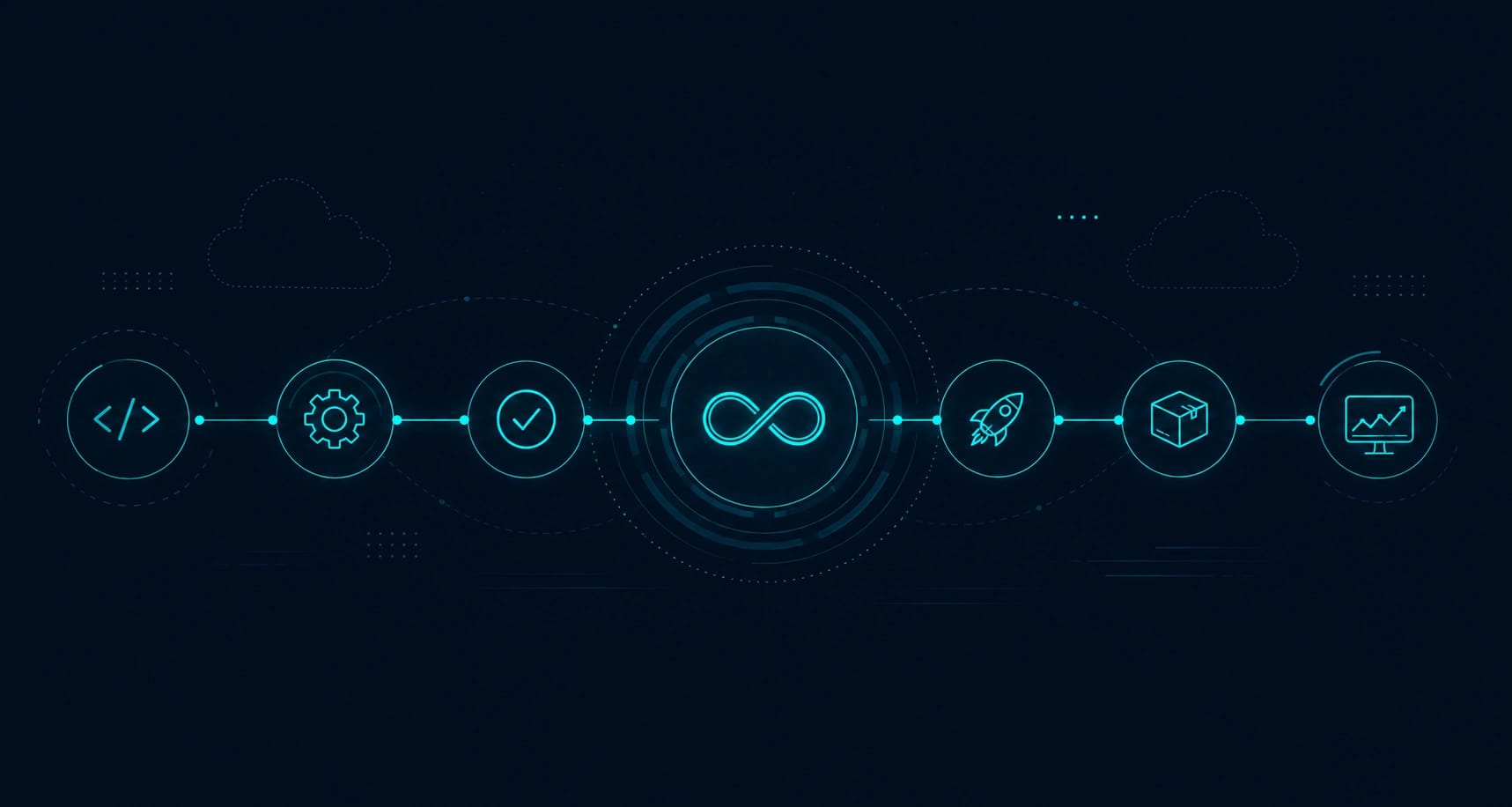
These practices of CI/CD help the teams to build, test and deploy software with as few manual steps as possible. It lies next to DevOps, but the breadth is narrower: design in pipelines, automate gates/controls/deployment/test feedback loops. When pipelines suffer from slowdowns, fragility or over-reliance on one internal engineer, many companies go to CI/CD providers.
The reason is practical. CI/CD tools look simple until a team needs reliable releases across environments, services, cloud accounts, security checks, Kubernetes, Terraform, and rollback paths. A weak pipeline can slow every sprint. A broken deployment process can turn Friday releases into a team sport nobody wants to play.
This article covers service-based top CI/CD companies that design, audit, and build CI/CD pipelines for clients. It does not rank CI/CD platforms. GitHub Actions, GitLab CI/CD, Jenkins, ArgoCD, and Azure DevOps are tools. The companies below help teams choose, connect, configure, secure, and maintain those tools.
You will get a comparison table, a detailed AppRecode review, short reviews of Symfa, Radixweb, Simform, and EPAM Systems, criteria for choosing a provider, market research, and FAQs.
Top CI/CD Companies Comparison Table
| Company | HQ | Clutch Rating | Key CI/CD Services | Best For | Pricing Model |
|---|---|---|---|---|---|
| AppRecode | Lviv, Ukraine | 5.0 | CI/CD consulting, pipeline automation, DevOps Health Check, Kubernetes, Terraform, MLOps | Startups, scale-ups, and ML/AI teams that need audit-first CI/CD delivery | Health check, project-based, sprint-based, and ongoing delivery |
| Symfa | Sunny Isles Beach, FL, USA | 4.9 | DevOps managed services, cloud, CI/CD support, custom software delivery | Mid-sized companies that need software delivery and DevOps support together | Project-based and dedicated teams |
| Radixweb | Frisco, TX, USA | 4.8 | DevOps managed services, cloud consulting, software engineering, testing automation | Product companies that need CI/CD inside a larger software delivery program | Project-based and team extension |
| Simform | Orlando, FL, USA | 4.8 | Cloud consulting, DevOps managed services, staff augmentation, testing, app support | Companies that need CI/CD, cloud, and engineering capacity across time zones | Dedicated teams, staff augmentation, and project-based work |
| EPAM Systems | Newtown, PA, USA | 5.0 | Platform engineering, cloud, enterprise DevOps, release engineering, app modernization | Enterprises that need global scale, governance, and complex delivery programs | Large project, enterprise consulting, and managed delivery |
Company #1. AppRecode
Overview
AppRecode is a CI/CD consulting and DevOps company focused on infrastructure, automation, cloud delivery, and production readiness. It works with CI/CD pipeline automation, DevOps Health Check, MLOps, cloud infrastructure, Kubernetes, Terraform, GitHub Actions, GitLab CI/CD, Jenkins, and ArgoCD.
AppRecode fits teams that need a practical CI/CD partner, not a huge software vendor with pipeline work somewhere in the middle of a long service menu. The company can start with CI/CD Consulting, then move into pipeline remediation, monitoring, cloud work, and release automation.
Its DevOps Health Check service gives teams an audit-first entry point. This matters when a team knows releases are slow or risky but does not yet know whether the root cause sits in tests, infrastructure, environments, permissions, or manual approval steps.
AppRecode also offers DevOps Development, MLOps Services, and MLOps Consulting. You can also check AppRecode on Clutch for verified client reviews.
Pros
- Audit-first approach through DevOps Health Check. AppRecode can review current delivery processes before changing pipelines.
- Strong CI/CD and cloud focus. The service mix covers GitHub Actions, GitLab CI/CD, ArgoCD, Jenkins, Kubernetes, Terraform, and monitoring.
- MLOps expertise. This helps ML and AI products that need model deployment, model tracking, and production monitoring.
- Sprint-based delivery. AppRecode can support focused pipeline work without forcing a long enterprise program from day one.
- Clearer vendor scope. The company is focused on DevOps, CI/CD, cloud, and MLOps rather than broad unrelated services.
Cons
- AppRecode may not fit a Fortune 500 buyer that needs thousands of engineers across many regions.
- MLOps support may be unnecessary for teams without ML workloads.
- Teams that require 24/7 global managed operations should confirm support coverage before signing.
- Buyers with deep enterprise procurement rules may need extra time to review legal, compliance, and security requirements.
For Whom
AppRecode works well for startups and scale-ups with slow or unreliable pipelines. It also fits companies moving away from manual deployments, fragile release scripts, and one-person DevOps ownership.
AppRecode can also help ML and AI product teams that need CI/CD plus MLOps. These teams often need automated model deployment, model versioning, data checks, and production monitoring. Standard CI/CD work often misses those parts.
Industries
SaaS, fintech, ML and AI products, e-commerce,setcrvargytlic IoT cloud-based platforms in Healthcare tech telecom If you are on a regulated team, as some teams in our company are, take note of the access control, secrets management, audit logs, compliance gates, and environment separation.
Case Studies
Case Study 1. CI/CD Pipeline Setup
Client: Kubernetes-focused open-source product company.
Challenge: The client needed stronger CI/CD processes, better test execution, cleaner Kubernetes workflows, and more reliable infrastructure for products such as Testkube, Monokle, and Kusk. The team also needed to reduce testing time, improve artifact handling, and lower troubleshooting effort.
Solution: AppRecode supported Dockerization, infrastructure as code, Kubernetes-based microservices, GitLab CI, Amazon EKS, and DataDog monitoring. The team assisted in building and enhancing Kubernetes-centric products, centralized test artifact storage, unified reporting, branch protection, requisite reviews, image-scan gates as well as versioned artifacts.
Result: The project minimized testing time by up to 90%, lowered troubleshooting time by over 20% and enhanced CI/CD quality with an improved test workflow, better reporting & stable Kubernetes delivery.
Case Study 2. DevOps Health Check + CI/CD Remediation
Client: AI-powered customer experience and contact center software provider.
Challenge: The client had pre-existing but not-optimized and distributed DevOps infrastructure continuum based on EC2-based services, which they wanted to migrate to a Kubernetes-based setup. The current system in place needed to allow for better scaling, clearer infrastructure ownership, improved deployment automation and real time monitoring.
Solution: AppRecode started with a discovery phase and migration plan. The workloads were migrated to AWS EKS, Kubernetes based microservices were added, infrastructure as code was built with Terraform, GitOps practices were established, a VPN Direct Connect was setup to on-premise infrastructure and a CI/CD environment using GitHub Actions & ArgoCD was introduced. Meanwhile, AppRecode integrated Datadog and Logz to bring holistic observability.
Result: This provided a cleaner Kubernetes based architecture, full IaC coverage, more automation in CI/CD (Continuous Integration and Continuous Deployment), GitOps-enabled rollbacks with ease, better scalability, and stronger monitoring on the platform. Publicly traded materials talk about greater operational efficiency and resilience but stop short of providing precise MTTR, uptime or change failure rate numbers.
Case Study 3. CI/CD + MLOps Pipeline
Client: AI-driven media intelligence and marketing analytics company.
Challenge: The platform that visits verified ad spend data from advertisers/agency needed a foundation on AWS with security and scale. There was a need for reproducible infrastructure, lesser drift in the environment, better release automation and standardization of containerization; secure AWS integrations; multi- accounts and regions networking and enhanced monitoring.
Solution: AppRecode created AWS infrastructure using Terraform, orchestrated deployments using Jenkins and GitLab CI/CD supported by Docker, Kubernetes/ECS, CloudWatch, New Relic for monitoring services decommissioned Transit Gateway and establish secure cross-account access. The project covered architecture and security baseline, IaC standardization, CI/CD automation, containerization, AWS service integrations, networking, and full-stack observability.
Result: The case reports 70% faster deployments, 99.995% uptime, MTTR under one day, higher developer productivity, and secure cross-account communication. AppRecode’s public case does not list model versioning, automated training, or drift monitoring, so this should be described as CI/CD automation for an AI-driven platform rather than a confirmed full MLOps pipeline.
Company #2. Symfa
Symfa is a software development company with DevOps managed services, cloud consulting, and custom software delivery. Its Clutch profile lists DevOps Managed Services among its service categories, which makes it relevant for teams comparing CI/CD firms with broader engineering skills. Symfa fits companies that need CI/CD support as part of application modernization, migration, or product delivery. It may not be as pipeline-specialized as a CI/CD-only vendor, but it can support teams that want engineering and delivery work under one roof. Symfa is a practical option for mid-sized companies with software delivery and cloud needs.
Company #3. Radixweb
Radixweb is a software development and product engineering company with DevOps Managed Services listed on Clutch. It works well for companies that need CI/CD work as part of a larger product engineering project. Radixweb can fit teams that want application modernization, testing, cloud work, and release automation in one engagement. It may be less focused than a niche CI/CD consultant, but it brings broader engineering capacity. Among CI/CD vendors, Radixweb is best for teams that need product development plus delivery automation.
Company #4. Simform
Simform is a software engineering and cloud consulting company with DevOps Managed Services, application support, testing, and staff augmentation services. It has a large review base and several US locations, which can help buyers that need time zone coverage. Simform fits companies that need CI/CD support alongside cloud, app development, and engineering teams. It is a good option when a buyer needs more than pipeline setup and wants delivery capacity across several workstreams. Simform may not be the leanest choice for a small pipeline audit, but it can support bigger programs.
Company #5. EPAM Systems

EPAM Systems is a global provider of digital engineering and product development services, full-fledged enterprise delivery capabilities. It is suited to large organizations with complex platforms, multi-region programs, governance requirements and long-term modernization work. Devops, cloud, platform engineering, application modernization and release engineering are all well supported by EPAM over large teams. For smaller teams, EPAM may be more than the project requires. For enterprise buyers comparing CI/CD agencies and large engineering partners, EPAM is a serious option.

Looking for a CI/CD company that starts with an audit and builds pipelines that actually hold up?
Start with CI/CD Consulting
Explore moreHow to Choose a CI/CD Company: Key Criteria
Criterion 1. CI/CD as Core Competency
Look for a company where pipeline automation is not a secondary add-on but one of its host services. You could require CI/CD pipeline providers in which case the most knowledgeable and best CI/CD pipeline provider can provide insight into build stages, test gates, artifact handling, deployment approvals, rollback logic, observability without making the answer sounded like vendor soup.
Criterion 2. Audit-First Approach
The best CI/CD as a service providers start by reviewing the current delivery process. A pipeline audit can show whether the real issue is slow tests, bad environment design, missing secrets control, weak rollback plans, or unclear ownership. AppRecode’s DevOps Health Check is built for this kind of starting point.
Criterion 3. Multi-Cloud and Toolchain-Agnostic Delivery
A strong provider should work across GitHub Actions, GitLab CI/CD, Jenkins, ArgoCD, Kubernetes, Terraform, AWS, Azure, and Google Cloud where needed. One-tool thinking can create new lock-in. The right provider should fit the pipeline to your delivery model, not the other way around.
Criterion 4. Security Integration
A mature CI/CD partner should add SAST, DAST, dependency scanning, secret scanning, image scanning, and approval gates inside the pipeline. Security after launch is usually more expensive and more painful. This is extra important for fintech, healthcare, and enterprise SaaS.
Criterion 5. MLOps Capability
For ML products, CI/CD alone is not enough. You need model versioning, training automation, model registry, monitoring, drift alerts, and rollback rules. This is where AppRecode’s MLOps work can help teams that need production AI delivery, not just code deployment.
Criterion 6. DORA Metrics Tracking
Good CI/CD work should improve measurable delivery outcomes. Ask every provider how they track deployment frequency, lead time for changes, MTTR, and change failure rate. If a vendor cannot measure pipeline health, it may struggle to improve it.
Criterion 7. Verified Clutch Reviews
Look for verified reviews with real outcomes, not vague praise. A practical benchmark is at least 4.7 out of 5, plus review text that mentions delivery quality, communication, engineering depth, and project results. Use Clutch: Top DevOps Managed Services to compare options, then read the actual reviews.
CI/CD Market: Key Numbers and Trends
The CI/CD market keeps growing because software teams need faster releases, fewer manual handoffs, and safer deployment paths.
- Verified Market Research reports that the Continuous Delivery market was about $3.7 billion in 2023 and is projected to pass $12 billion by 2030. Verified Market Research: Continuous Delivery Market connects this growth to release speed, software quality, and lower deployment risk.
- JetBrains also shows that developer tooling keeps changing fast. Its 2025 reporting covers CI/CD tool use, common tasks, challenges, and AI in delivery workflows. JetBrains: State of Developer Ecosystem – CI/CD Data is useful for teams that want to see how CI/CD practices look across real engineering teams.
Main trends:
- Pipeline work is becoming more platform-like. Teams want reusable paths for build, test, deploy, rollback, and monitoring. This pushes CI/CD work closer to platform engineering.
- Toolchains are getting more mixed. Many teams use more than one CI/CD tool across products. Jenkins, GitLab CI/CD, GitHub Actions, ArgoCD, Azure DevOps, and Octopus often sit together in the same company.
- Security now belongs inside the pipeline. Secret scanning, dependency checks, image scanning, and policy checks are moving into CI/CD gates. This makes DevSecOps a buying requirement, not a bonus.
- MLOps is changing CI/CD needs. ML teams need pipelines for models, data, training jobs, and monitoring. This is why MLOps Services and MLOps Consulting belong in CI/CD discussions for AI products.
- Deployment tools still matter. Octopus Deploy: Best CI/CD Providers lists common CI/CD options and shows how many different tool paths teams may consider. Service providers help teams choose and connect these tools without building a mess with a logo.
Final Thoughts
Choosing a CI/CD company depends on team size, stack complexity, release pain, cloud maturity, and compliance needs. A startup with slow manual deployments may need a focused CI/CD provider with an audit-first model. A scale-up may need CI/CD plus Kubernetes, Terraform, monitoring, and DevSecOps. An ML company may need CI/CD plus MLOps.
AppRecode is a strong fit for teams that want focused CI/CD consulting, DevOps Health Check, cloud infrastructure, and MLOps delivery. Symfa, Radixweb, and Simform work well when CI/CD sits inside broader software delivery. EPAM fits enterprise programs that need scale, governance, and multi-region engineering capacity.
There is no universal best provider. The right partner is the one that finds your delivery bottleneck, fixes it cleanly, and leaves the team with a pipeline it can trust.
FAQs
What Are CI/CD Companies?
When a company calls itself a CI/CD company, ask what appears on its invoice. If the answer is an audit, pipeline design, migration, implementation, or ongoing operations, it is a service provider. Its engineers may connect source control to builds and tests, manage artifacts, automate infrastructure and cloud releases, add monitoring, or help a client recover from a failed deployment.
That is different from selling the automation product. GitHub Actions, GitLab CI/CD, Jenkins, and Azure Pipelines are platforms or tools. A consulting team configures and operates tools like these for a client. The categories can overlap: a platform vendor may sell professional services, while an agency may bundle licenses. Split any proposal into software, cloud usage, project work, and support before comparing it with another offer.
The shape of the engagement matters too. In an assessment, the provider follows the existing route from commit to production and documents evidence, risks, and priorities. During implementation, it may replace fragile scripts, create reusable workflows, secure credentials, and establish a repeatable release. A managed service takes on agreed operational work. Staff augmentation is different again: engineers join the client’s team, but the client usually keeps delivery ownership.
Hiring a provider does not transfer all software risk. The client still needs someone who owns release decisions, accepts changes, governs access, and can explain the system. Put repositories, environments, data constraints, availability needs, and exclusions into the scope. “Improve our pipelines” is not a measurable deliverable. “Deploy one verified artifact to staging and production, with tested recovery and a runbook,” is much closer. A useful contract states what changes, how acceptance is demonstrated, who operates it afterward, and what is deliberately left out.
What Do CI/CD Providers Offer?
A CI/CD provider may be hired for one narrow job or for the whole delivery system. At the small end, the work might be a two-week review of slow builds. A larger engagement can cover platform migration, shared pipeline templates, infrastructure as code, container or Kubernetes deployments, and long-term support. The proposal should say which of these is actually included.
Good providers normally begin by following a change from commit to production. This exposes delays, unreliable tests, manual approvals, duplicated builds, excessive privileges, and missing release evidence. The result should be a list of findings and priorities. A maturity score on its own is not much use.
Implementation often includes automated builds and tests, artifact storage, environment promotion, deployment strategies, monitoring, and a tested recovery route. Security may involve short-lived workload identities, protected secrets, isolated runners, governed third-party actions, dependency or image checks, provenance, policy gates, and audit records. Both NIST SP 800-204D and OWASP treat CI/CD as part of software-supply-chain security, so pipeline protection is not an optional extra.
Providers also improve the developer experience. They can measure queue and execution time, remove needless rebuilding, split large test suites, fix unsafe caching, and reduce handoffs. DORA’s delivery measures cover change lead time, deployment frequency, failed-deployment recovery time, change fail rate, and deployment rework rate. These measures help establish whether the work changed outcomes; merely installing a dashboard does not.
Managed services add another layer: upgrades, incidents, runner capacity, access reviews, cost control, and onboarding. Before signing, ask for tangible outputs—working code, tests, diagrams, runbooks, training, evidence exports, support hours, and handover terms. The phrase “CI/CD services” is otherwise broad enough to hide differences between bids.
How to Choose the Best CI/CD Providers for Cloud Deployment?
Write a one-page problem statement before opening a ranking. How many repositories and environments are involved? Which cloud and deployment tools are already in use? What fails today: feedback time, security, release reliability, ownership, or compliance evidence? State whether you want advice, an implementation, or somebody to operate the result. A provider suited to one manually deployed application may be wrong for a shared enterprise platform.
During interviews, give candidates a representative release and ask them to walk from commit to production. Listen for identity, tests, artifact promotion, environment separation, database compatibility, telemetry, and recovery. A good answer should fit your system instead of turning every problem into the supplier’s favorite product. Confirm that the proposed engineers—not only the company logo—have worked with the cloud and orchestration stack in scope.
Discuss access before the project starts. Ask how provider staff authenticate, obtain production privileges, use secrets, approve changes, secure runners, review third-party components, and report incidents. “DevSecOps included” is not a control. For a regulated workload, the client’s security and compliance owners should review the mapping and retained evidence.
Then examine how the work will run. Who owns priorities and architecture decisions? Which roles are subcontracted? What coverage exists after hours? Define acceptance, warranty, escalation, documentation, knowledge transfer, and exit.
If the estate is unclear, buy a short discovery or contained pilot. Give finalists the same information and score their assumptions, outcomes, security, maintainability, communication, and total cost. The right choice is the provider that understands your constraints and leaves a system your team can support. It need not be the largest firm or the first company in a promotional list.
What Are CI/CD as a Service Providers?
“CI/CD as a service” can describe two different offers. One is a hosted automation platform: the vendor runs the control plane and often provides hosted workers, while customers define workflows. The other is a managed service in which engineers design, operate, and improve a client’s pipelines. Some proposals combine the platform, professional services, and support. Clarify which meaning applies before comparing prices.
In a managed arrangement, the provider may maintain shared templates, runners, integrations, artifact storage, access policies, monitoring, and upgrades. It may onboard repositories, respond to pipeline incidents, tune performance, and implement new deployment patterns. Responsibility can range from advisory support to a service with agreed hours, response targets, and operational ownership.
Ask for a responsibility matrix. It should identify who approves workflow changes, administers identities, patches self-hosted runners, rotates credentials, pays platform usage, handles an outage, and accepts security exceptions. Define service hours, incident severity, response and restoration targets, maintenance windows, change records, reporting, and escalation. “24/7 monitoring” does not necessarily mean an engineer will remediate a failed deployment at 03:00.
The commercial model may combine a setup project, monthly retainer, usage charges, and third-party licenses. Establish baselines for repositories, pipeline minutes, environments, support tickets, and expected change volume so overages are understandable. Include portability and exit terms: ownership of workflow code, infrastructure definitions, documentation, credentials, artifact history, and a transition period.
Managed CI/CD can be valuable when an internal team lacks platform capacity, but accountability cannot be outsourced completely. The client still owns product risk, data obligations, and release authority. A sound service makes the division of work explicit and gives the client enough access and knowledge to supervise it.
What Should CI/CD Pipeline Providers Include?
The proposal should begin with scope and acceptance criteria. List repositories, services, environments, clouds, deployment targets, users, and exclusions. Ask for a map and target design covering triggers, build and test stages, artifact flow, infrastructure changes, approvals, rollout, monitoring, and recovery. Each deliverable needs an owner and a testable definition of done.
Pipeline code should be version-controlled, reviewed, and reusable where that reduces drift. A provider should build once and promote an identified artifact rather than rebuild independently for production. Include test strategy, dependency management, artifact retention, configuration ownership, environment separation, and an approach to database migrations. Rollback language must acknowledge irreversible data and external side effects; sometimes a compatible roll-forward is the safe response.
Security controls should be concrete. Expect least-privilege human and workload identities, protected secrets, governed third-party actions, safe handling of untrusted code, runner isolation, vulnerability checks chosen for the stack, protected registries, logs, and an exception process. If signatures, attestations, or provenance are generated, the deployment path needs a verification policy. Compliance controls should follow actual scope and obligations, not a universal checklist.
Operational readiness is equally important. Require deployment telemetry, alerts, runbooks, tested recovery, ownership, service objectives, and support escalation. Baseline queue time, pipeline duration, test reliability, deployment outcomes, and DORA measures so improvements can be evaluated without inventing a percentage. Include cost visibility for runners, storage, licenses, and cloud resources.
Finally, require documentation and knowledge transfer: diagrams, repository conventions, access model, maintenance procedures, and training for the receiving team. State who owns all code and accounts, how changes are accepted, what warranty applies, and how the engagement exits. A working demo is not enough if the client cannot safely operate the pipeline afterward.
What Is the Difference Between CI/CD Vendors and CI/CD Agencies?
The distinction is what the customer is buying. With a CI/CD vendor, the main purchase is software: access to a platform, licenses, runners, storage, and product support. With an agency or consultancy, the main purchase is a team’s work. Its specialists might review the setup, move pipelines to another tool, build deployment automation, or run the system after launch.
Labels are loose, however. GitHub, GitLab, Microsoft, and other platform companies can sell professional services or premium support. A consultancy may resell software as part of its project. Read the proposal and separate license fees, cloud consumption, implementation work, and support.
Questions should follow the purchase. For software, look at hosting, integrations, runner choices, availability, security, data location, export options, and pricing units. Find out whether support will investigate only the platform or also help with a customer’s workflow configuration. For an agency, meet the people assigned to the account. Check their experience with a similar stack, how they obtain access, whether subcontractors are involved, what documentation they produce, and how knowledge will reach the team.
Many organisations need both. In that case, write down the boundary before production use. Who owns the repositories and workflow code? Who responds when a deployment fails? Who opens the platform support case, and who stays responsible until service is restored?
This sounds administrative until the first outage. Without a responsibility matrix, each supplier can reasonably believe the problem belongs to the other. Choose the vendor for a product that fits the organisation over time. Choose the agency for evidence that its people can deliver and hand over the required work. They are connected purchases, not interchangeable competitors.
How Much Does a CI/CD Consulting Engagement Cost?
There is no credible universal price. A focused assessment of several similar pipelines is a different purchase from migrating hundreds of repositories, building a multi-region deployment platform, or providing round-the-clock operations. Geography and rate matter, but scope uncertainty, integration count, security obligations, and the condition of the existing system often affect cost more.
Ask the provider to separate discovery, implementation, third-party expenses, and ongoing support. Discovery may be fixed-price when repositories and deliverables are bounded. Implementation can use a fixed scope, time-and-materials, milestones, or a dedicated team. Managed service is commonly a retainer with assumptions about hours, repositories, environments, incidents, and change volume. Platform licenses, hosted runner minutes, cloud compute, artifact storage, security tools, and travel should appear separately.
A comparable quote needs the same inputs: repositories, pipeline technologies, applications, target environments, clouds, runners, compliance scope, availability requirements, integrations, migration deadline, and expected handover. Require assumptions and exclusions. “Pipeline setup” could mean one build-and-deploy workflow or an organization-wide platform with identity federation, reusable templates, evidence retention, and on-call support.
Evaluate total cost and risk, not just the initial rate. Include internal engineering time, access preparation, data or secret migration, parallel running, training, maintenance, lock-in, and exit. Tie payments or milestones to observable deliverables such as a mapped baseline, accepted design, production pilot, tested recovery, documentation, and knowledge transfer. Avoid promises of a fixed savings percentage without a measured baseline.
For an unclear estate, a small paid assessment is often the safest first contract. It should reduce uncertainty enough to price later work more honestly. A provider that gives a precise total before asking about scope is offering an estimate with hidden assumptions, whether or not the proposal says so.
What Should We Ask a CI/CD Provider During Due Diligence?
A useful due-diligence meeting should include the engineers who would join the project. Give them a recent release problem and ask what they would inspect first, which assumptions they are making, and what could go wrong. Ask what those people personally built on comparable work and whether a reference client can confirm it. Record location, seniority, availability, subcontractors, and the replacement process.
Before anybody receives access, trace the identity route. Provider staff should use named accounts, strong authentication, and client-approved privileges. Ask who grants production access, who reviews workflow changes, and how temporary access expires. Cover secrets, local data copies, logs, vulnerability reports, incidents, employee departures, and return or deletion of client data. Assurance reports and insurance may matter, but the client’s security, privacy, and legal teams still need to review architecture and contract terms.
Make the daily operating model concrete. Who decides priorities and design? Who accepts work and owns documentation? What happens outside business hours? Request examples of a status report, risk register, design record, runbook, and incident review. Define service hours, maintenance, response targets, holidays, escalation, and the provider’s route to platform-vendor support.
Ask about the last day as carefully as the first. Keep critical repositories, cloud accounts, domains, and production credentials under client control. Establish ownership of workflow code, templates, artifacts, infrastructure definitions, and documentation. List proprietary components, export formats, knowledge transfer, transition help, and what stops working when the contract ends.
Finally, score every candidate against the same published criteria. Due diligence cannot find a supplier with zero risk. It should reveal capability, access, responsibility, dependencies, and exit cost while the client still has a choice—not after the first production incident.
How Can We Avoid Vendor Lock-In When Outsourcing CI/CD?
Keep the foundations under organizational control. The client should own the source repositories, cloud accounts, artifact registries, identity tenants, domains, encryption keys where appropriate, and production credentials. Give the provider named, revocable access instead of building the platform inside an account that only the supplier controls. This preserves an exit path without preventing the provider from working efficiently.
Store pipeline and infrastructure definitions in version control the client can access. Prefer documented interfaces, standard artifact formats, and portable scripts or containers when they meet the need.
Separate generated artifacts from transient runner state. Retain source revision, build metadata, digests, dependencies, configuration, and provenance needed to understand a release. SLSA describes provenance as verifiable information about where, when, and how an artifact was produced. That evidence still needs independent verification and an exportable location; a proprietary dashboard alone is a weak handover.
Put portability in the contract. Define ownership and licensing for workflow code, templates, custom integrations, documentation, and reusable accelerators. Require current diagrams, runbooks, credential inventories, dependency lists, and training. Specify export assistance, transition time, data return or deletion, and the format of logs and artifacts. Avoid automatic renewal terms that leave no practical migration window.
Reduce operational dependency as well as technical dependency. Pair provider engineers with internal owners, review changes together, rotate operational duties, and test whether the client can deploy and recover without one named consultant. Maintain a periodic exit checklist and rehearse account revocation. The objective is not zero switching cost; that is rarely realistic. It is a known, bounded switching cost and a delivery system the client can supervise and continue.