

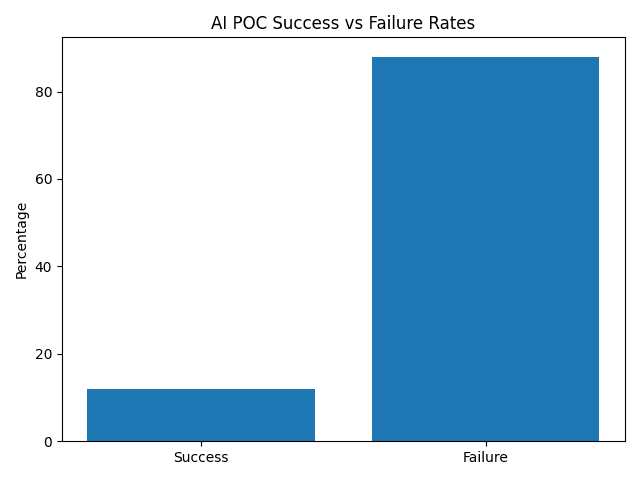
Most machine-learning projects fail to survive past the proof-of-concept development phase. The majority of AI pilot projects fail to advance into production according to industry analysts who predict this will happen to 88% of all such initiatives. The difference between a successful model design and a functional product emerges because of absent engineering procedures instead of inadequate algorithm performance. In this article, we outline MLOps practices that any team can follow to build reliable, auditable, and secure ML systems.
MLOps operates through a systematic method which unites DevOps development services with data and model management discipline. The implementation of MLOps lifecycle best practices for your company will be straightforward because your organization already operates with CI/CD for software development.
The following piece outlines eleven concrete practices that distinguish successful experiments from those that fail.
Why So Many AI Projects Fail
An AI proof of concept might demonstrate accuracy on a carefully curated dataset. Once in production, the real world introduces noise, drifting data distributions, and evolving user behaviour. Without reproducibility, teams cannot trace why a model performed well last week but fails today. When pipelines are stitched together with scripts, deployment becomes a manual process, and debugging can take days.
The IDC reports that AI pilots need 33 instances to achieve only four successful full-scale deployments. The high failure rate demonstrates that best practices for MLOPs require particular approach, one which should handle data and code and infrastructure elements as a single system.

Ready to adopt MLOps security best practices and deliver models that behave in the real world? Consult with our experts and discover how we can guide you from pilot to production.
Start Here11 MLOps Best Practices
The list below summarises what strong MLOps teams do differently to get top-notch MLOps pipeline best practices. The guide explains each practice through basic definitions which guide users through step-by-step operational procedures that show their practical use in business settings. The document serves as a checklist which helps organizations build a MLOps practice or enables them to assess external MLOps development service providers.
Practice #1. Design for Reproducibility and Auditability from Day One
Basics: Record every experiment: data version, code hash, hyper‑parameters, and environment.
How to Apply: Users need to perform dataset and model versioning through MLflow or DVC tools as part of their application process. The system requires two types of monitoring for experiments which include notebook documentation and pipeline management.
Examples: A fintech firm achieved a 30% reduction in fraud investigation time through model decision analysis by replaying training runs.
Practice #2. Automate ML Pipelines with CI/CD/CT
Basics: The system operates through three core elements which include Continuous integration (CI) for building and testing code modifications and Continuous delivery (CD) for deploying changes and Continuous training (CT) for model updates using fresh information.
How to Apply: The implementation process requires users to connect their data ingestion operations with training and evaluation and deployment functions through Kubeflow and Airflow pipeline orchestrators. Integrate tests for both code and data.
Examples: The implementation of CI/CD enables teams to speed up their model release cycles because automated testing shortens release times from months to days.
Practice #3. Treat Data as a First‑Class Production Asset
Basics: Data quality determines model performance. Poor data quality costs organisations 15–25% of revenue.
How to Apply: The application process consists of three essential steps which involve data contract and schema enforcement and validation checks during ingestion and metadata catalog maintenance.
Examples: The media company used Great Expectations tests in its pipelines which resulted in a major reduction of model errors because of absent data points.
Practice #4. Implement Comprehensive Testing at Every Stage
Basics: The practice includes three testing categories which verify code functionality through unit tests and check system interactions through integration tests and verify feature performance within defined boundaries through data tests.
How to Apply: The application process requires developers to create unit tests which check preprocessing functions and integration tests which verify pipeline operations and statistical tests which evaluate training and inference data.
Examples: The health-tech startup detected a data leakage bug during pre-deployment testing by running a fundamental cross-validation test.
Practice #5. Monitor Models in Production, Not Just During Training
Basics: Models degrade when data shifts. The system fails to detect silent failures which continue to exist for multiple weeks when no monitoring is in place.
How to Apply: The application process requires users to monitor three performance indicators which include prediction drift and latency and feature distribution metrics. The tools, Evidently AI and Prometheus, serve as available options for implementation.
Examples: The system uses real-time monitoring to evaluate recommendation quality at Netflix and it runs canary rollbacks when performance metrics show any decrease.
Practice #6. Enable Automated Drift Detection and Retraining
Basics: Drift occurs when data distributions change. Automated retraining keeps models current.
How to Apply: Define thresholds for drift metrics; schedule retraining jobs; test new models in shadow mode.
Examples: Revolut’s Sherlock platform automatically re-trains fraud models when transaction patterns shift.
Practice #7. Implement Safe Deployment Strategies for ML
Basics: Organizations can reduce their risk exposure through the deployment strategies which include blue‑green and canary and shadow deployments.
How to Apply: The implementation process should start with a limited traffic test of the new model which should then be compared to the baseline model before a step-by-step deployment of the new model.
Examples: Spotify’s MLOps platform deploys new recommendation models to a small user cohort first.
Practice #8. Build Security and Governance into ML Pipelines
Basics: ML systems need access to sensitive information to function but this data becomes dangerous when attackers successfully gain access to it.
How to Apply: Organizations need to implement secret management tools together with role-based access and automated compliance check systems to complete their application process.
Examples: Organizations that provide healthcare services must implement HIPAA-compliant audit log systems and they need to anonymize their training data when it first enters their system.
Practice #9. Maintain Centralised Model Registries and Metadata
Basics: The model registry requires three fundamental components which include version management and metadata storage and approval status tracking.
How to Apply: The application process requires users to select a registry system between MLflow Model Registry and Seldon Deploy before they can establish automatic model promotion through CI/CD integration.
Examples: The e-commerce company achieved model registry unification which removed duplicate information that led to team member confusion.
Practice #10. Establish Clear Model Ownership and Responsibilities
Basics: Assign owners to models, data pipelines, and infrastructure. The lack of established duties results in critical matters which get lost throughout the process.
How to Apply: The application process requires you to create a RACI matrix which should include owner documentation in your registry system.
Examples: The logistics provider achieved quick incident response because they had already established their model ownership charter.
Practice #11. Start Small, Standardise, Then Scale
Basics: Avoid building a mega-platform upfront. Prove value with a single pipeline; then generalise patterns. Pick one of these mlops use cases and use it as the baseline for your first production checklist.
How to Apply: Identify one high‑value use case; implement the practices above; document templates, and then expand.
Examples: Companies that pilot MLOps on a narrow use case and reuse the patterns see faster adoption across departments
“Putting models into production is like launching a rocket; you cannot cut corners. You version everything, you test what you can, and you always have a rollback plan. And yes, sometimes even rockets misfire — that is why we do canaries.” — Volodymyr Shynkar, CEO and Co‑Founder, AppRecode (verified on Clutch).
How These Practices Come Together in Real Systems
The best practices when implemented together produce results which surpass what each practice would achieve on its own. The ability to reproduce results leads to auditability which enables organizations to deploy their systems safely. The system performs testing and monitoring operations which enable automated retraining of your models for better performance. Security and governance keep your stakeholders confident. Teams start with limited goals which they improve through continuous learning to reach their next level of development.
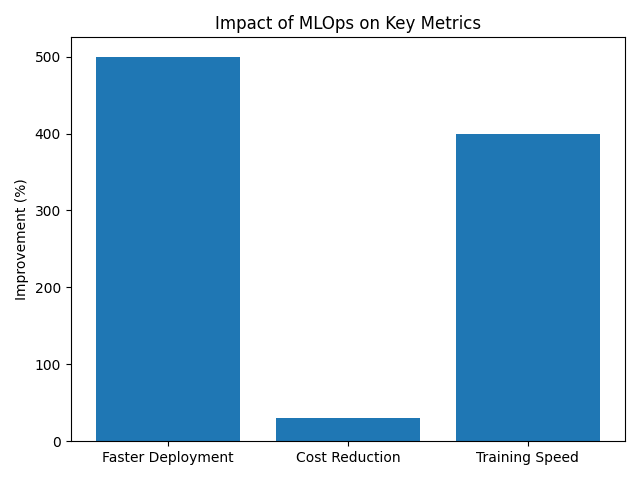
For example, our team recently helped a media platform overhaul its ML infrastructure. The solution used DVC to create versioned data pipelines and Kubeflow for automated training operations and Evidently for drift monitoring. The company reduced its misclassification errors by 40% during its initial six months of operation while it cut its infrastructure costs by eight times and started releasing software updates every week instead of every quarter.
Final Thoughts
MLOps serves as an operational base which supports AI operations. It is the operational foundation for AI. Organisations that implement best practices in MLOPs to achieve faster deployment cycles and reduced costs while obtaining better prediction reliability. Begin with one model while monitoring all aspects and use automation for possible processes and make continuous improvements. Your future self. And your customers will thank you.
FAQ
How do we determine if our company actually requires the best practices of MLOps at this time?
MLOps becomes necessary when users depend on models which exist within notebook environments. The need for reproducibility and monitoring becomes critical because data undergoes rapid transformations.
Can MLOps be implemented incrementally, or does it require a full rebuild?
You can start small. Adopt version control for data and models, then gradually automate training and deployment. A full platform is not needed from the start.
How long does it take to build a production‑ready MLOps practice?
The first requirement demands the development of a basic system framework. The system needs to establish version control for data and models before it begins automated training and deployment operations. A full platform is not needed from the start.
Do we need a specific cloud provider or MLOps platform to follow best practices?
What is the most common reason MLOps initiatives fail?
The projects often encounter two major obstacles because they lack clear ownership and their project scope extends beyond reasonable limits. Teams try to create one platform that does everything but they lack specific goals to guide their work. The team should begin with minimal assignments which establish particular tasks that each member needs to accomplish.